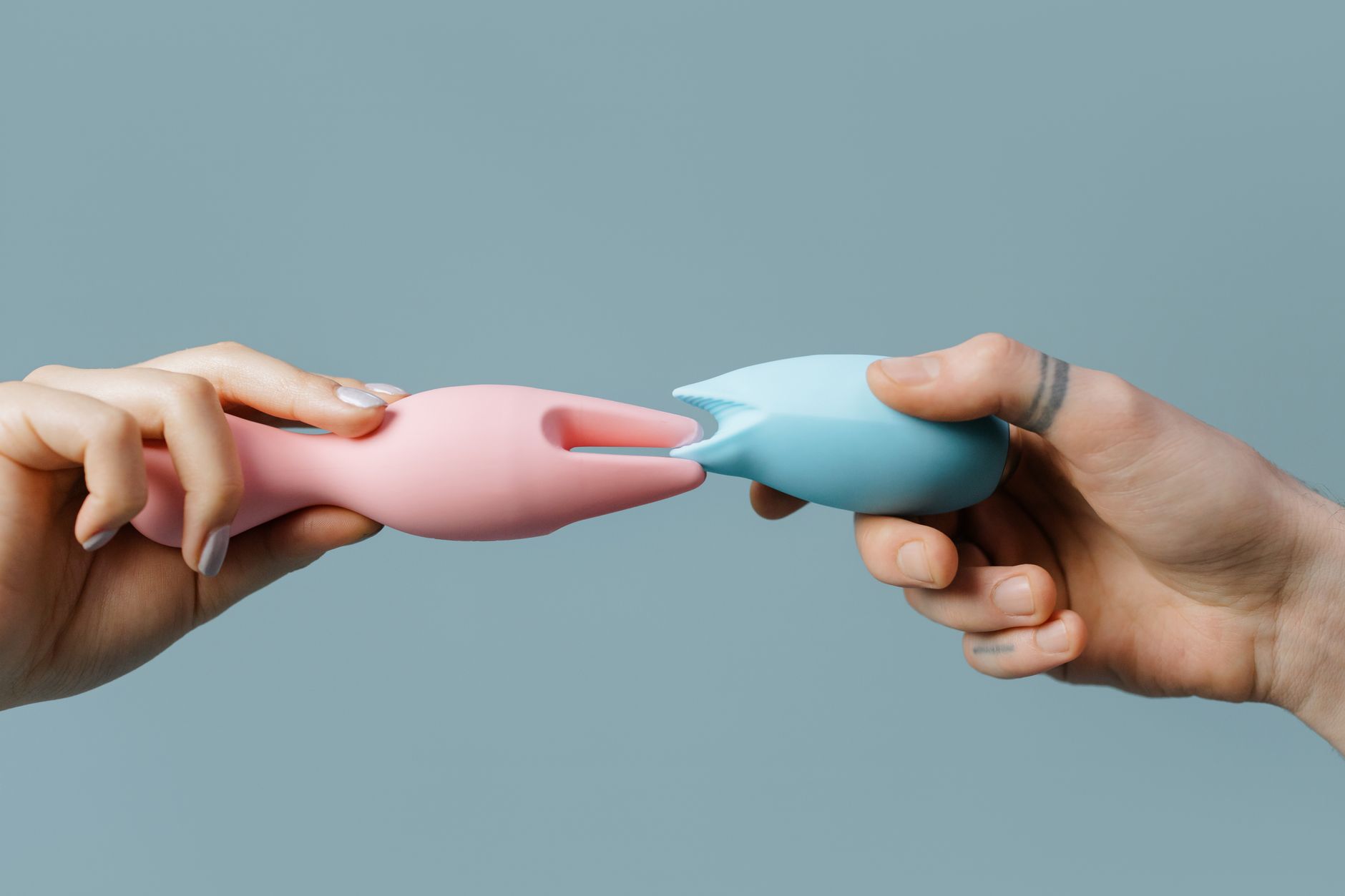
Lemon Vibrator for Women With Low Libido After Antidepressants
SSRIs flatten desire and sensation. A realistic guide to reclaiming pleasure, rebuilding arousal, and using a lemon clitoral vibrator when medication has made everything feel muted.
Antidepressants save lives. They also wreck libido. Not for everyone, but for about 40-60% of people taking selective serotonin reuptake inhibitors. Your desire vanishes. Arousal takes forever. Orgasms become impossible or feel like you're reaching them through a thick fog. You feel broken. You're not. Your brain chemistry changed, and it's a known, measurable side effect.
The conversation with your doctor probably went something like, "Does it cause sexual side effects?" "Some people experience that." End of discussion. What you weren't told: there are strategies to work around this, and a lemon clitoral vibrator can be one of the most effective ones.
SSRIs work by increasing available serotonin in your brain. That's brilliant for depression and anxiety. It's terrible for arousal. Here's why: sexual response requires a drop in serotonin levels. Your body literally needs less serotonin to feel turned on. When SSRIs maintain elevated serotonin, it creates a neurological brake on desire and the physical cascade that follows.
Then there's the dopamine problem. Orgasm involves dopamine. SSRIs can suppress dopamine too. So you're dealing with muted reward signals throughout your body. Touch feels less intense. Pleasure registers dimly. This is why many women on SSRIs describe sex as "watching themselves have sex" rather than feeling it.
The third piece: blood flow. Arousal depends on increased circulation to genital tissue. Serotonin plays a role in that too. SSRIs can reduce genital blood flow, which means less engorgement, less sensitivity, and a slower (or absent) arousal response.
None of this means you should stop your antidepressant. It means you need a different strategy for pleasure.
A lemon clitoral vibrator uses rapid pulsing stimulation, which bypasses some of the neurological dampening that SSRIs create. Here's the mechanism: instead of waiting for your nervous system to build arousal naturally (which SSRIs have slowed dramatically), a lemon vibrator directly stimulates the clitoral nerves. It does the heavy lifting your brain isn't doing right now.
That stimulation is non-negotiable. A regular vibrator works here too, but clitoral air-pulse technology like the lemon suction vibrator is particularly effective because it doesn't require the same intensity of direct pressure. For women on SSRIs with reduced sensation, that matters. You get powerful stimulation without the aggressive friction that can fatigue numb tissue.
The rhythm and pattern also help. Many people on SSRIs find that varying the pattern mid-session, rather than sticking with one steady vibration, helps the nervous system stay engaged. The lemon vibrator's multiple patterns give you that flexibility.
Second, and this is crucial: a lemon vibrator gives you permission to stop waiting. You're not sitting around hoping desire shows up. You're actively generating the physical response your medication has dampened. That shift from passive to active changes the entire experience psychologically.
If you haven't touched yourself in months because nothing felt like anything, starting over takes strategy. Three things help:
Start with exploration, not orgasm. Use your lemon vibrator on the lowest setting and spend 20-30 minutes noticing what registers. You're not chasing a finish line. You're mapping what sensation is available to you right now. Many women discover that after months of numbness, the tiniest amount of feeling is actually present. It's just been buried.
Layer lubrication. SSRIs reduce natural lubrication, and that reduction compounds the numbness problem. Use a good water-based lube generously. This isn't compensation. It's recreation of the conditions your body would naturally create if the medication wasn't in the way.
Give your nervous system time. Some women find that pausing for 5-10 seconds mid-stimulation helps prevent the nervous system from shutting down. Others find that building arousal in shorter sessions (15 minutes instead of 45) and repeating over several days works better than trying to force sustained arousal. There's no right way. Experiment.
Not all SSRIs are equal for sexual side effects. Paroxetine and fluoxetine tend to be more disruptive than sertraline or citalopram. If you've been on your SSRI for months and the sexual flatness hasn't improved, ask your doctor about switching. Many people find that a small dose adjustment helps. You might not need to come off the medication. Sometimes 50mg instead of 100mg makes the difference.
Timing also matters. If you're taking your SSRI once daily, ask your doctor whether you could take it at night instead of morning. It won't eliminate the effect, but some women find that sexual response is slightly better earlier in the day when levels are marginally lower. This is not medical advice. This is the conversation to have with your prescriber.
If you're in a relationship, your partner probably knows something's wrong. The absence of desire is obvious. Here's what helps: separating two conversations.
Conversation one: "My medication is affecting my sex drive, and I'm working on rebuilding sensation with some strategies, including tools like a lemon vibrator. I'm doing this for me. It's not about you or our relationship."
Conversation two: "I'd like your support while I'm working through this."
Those are different. The first gives context and removes the sting of rejection. The second actually asks for what you need. You might need solo time with the lemon vibrator first. You might want your partner present but not involved. You might want them to use it on you. None of those are wrong. But they're different conversations, and conflating them turns both into dead ends.
Some women find that showing their partner the lemon clitoral vibrator and explaining the mechanism helps. It's not a replacement for them. It's a tool for rebuilding sensation that their touch alone can't achieve right now.
If you've been on your SSRI for 12+ months and sexual function hasn't recovered at all, the cost-benefit is worth reviewing with your doctor. Some options: adding bupropion (which has a pro-sexual effect), switching to an SNRI like venlafaxine (which has fewer sexual side effects for some people), or timing your sexual activity for the hours right before your next dose (so levels dip slightly in between).
None of these are replacements for the lemon vibrator strategy. They work together. And they're all conversations, not decisions you make alone.
There's a myth that sexual function is optional once you're "stable" on medication. That pleasure is a luxury when you're fighting depression. It's not. Pleasurable sensation activates reward pathways in the brain that support mood, reduce stress, and reinforce the feeling that life is worth showing up for. Flatlined pleasure is not the same as stability. It's a different kind of suffering.
Using a lemon vibrator, or any tool that rebuilds sensation, is not frivolous self-care. It's part of your recovery. You deserve orgasms. You deserve to feel your body again. The medication gave you your life back. Now reclaim the pleasure that comes with it.
Usually 3-6 weeks of regular use. Some women notice a shift within days. Some take months. The variation depends on your baseline, the dose of your medication, how long you've been taking it, and your individual nervous system. Consistency matters more than intensity. Ten minutes daily is better than 45 minutes once a week.
You can use it while on your SSRI right now. That's the whole point. The vibrator is a tool for working with your current neurochemistry, not a replacement for medication adjustment. If medication adjustment would help, you can pursue that separately with your doctor.
Used correctly, it rebuilds sensation. The key is varying what you're doing. If you use it the same way every single time, yes, your nervous system adapts and you need more intensity to feel it. That's why pattern variation on a lemon vibrator matters. Switch patterns mid-session. Skip days. Change location. Vary duration. Your nervous system stays engaged when things change.
You should tell your doctor that you're addressing sexual side effects and exploring strategies, including tools designed for this purpose. You don't need to be graphic. Your doctor has heard this before. Many actually see it as a sign you're taking your whole health seriously, not just your mental health. But if your doctor responds poorly to that conversation, that's information about whether they're the right prescriber for you long-term.
Not directly. Birth control affects your neurotransmitter profile, but a vibrator bypasses some of that by providing direct neural stimulation. That said, hormonal contraception can contribute to low libido on its own. If you're on both SSRIs and birth control, the cumulative dampening is real, and that's worth discussing with your doctor.
Neither. It's a sign you're addressing a real side effect strategically. Some of the most medication-compliant, stable people use tools like this. Using a vibrator while on an SSRI you need is not a failure. It's problem-solving.
Antidepressants work. They also demand strategy. If your SSRI has killed your libido and flattened sensation, a lemon vibrator isn't a workaround for a broken system. It's a tool for rebuilding arousal when medication has slowed it down. That's legitimate. That's smart. And you deserve to feel pleasure again, even while taking the medication that gave you your life back.
If you want to explore this further or have questions about how tools like these fit into your specific situation, reach out. There's no shame in this conversation. There's only the reality that medication changes your body, and your body deserves attention and care.