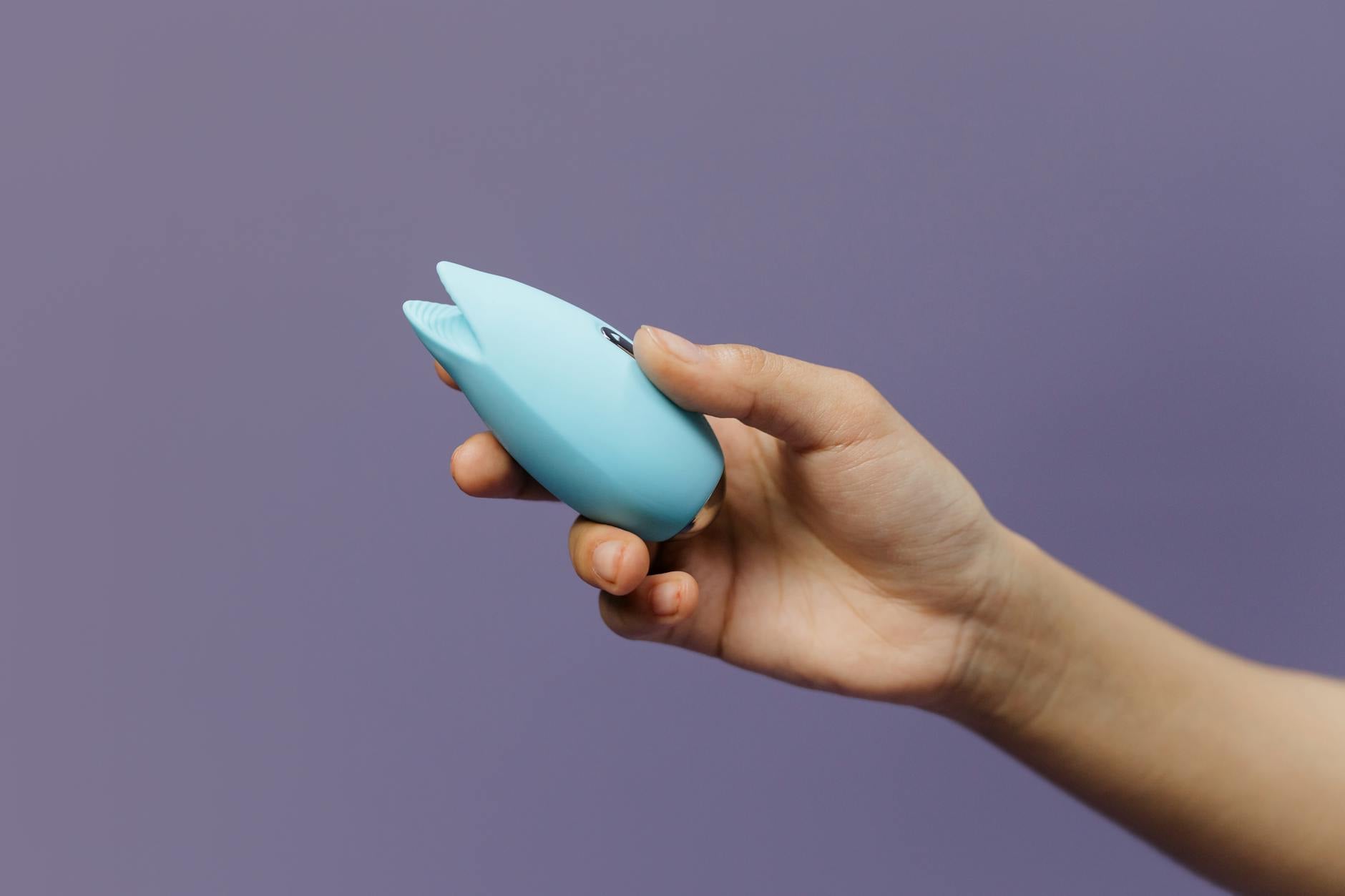
How to Use a Lemon Vibrator When Introducing Toys to a New Sexual Partner
Bringing up toys feels awkward. Here's the exact conversation starter, why lemon clitoral vibrators work best for couples, and how to move past the nerves together.
Introducing a lemon vibrator to someone you've just started sleeping with sits in this weird space. You want them to know you, which includes what you like. But you also don't want them to think you need a toy because they're not enough. That worry is completely normal. And it's also not something they're thinking about at all.
Most new partners are just relieved you're talking about pleasure explicitly. Toys aren't a referendum on their skills. They're an expansion. A collaboration. A way of saying: this is what we can figure out together.
Let's walk through how to navigate this without the awkwardness.
You don't just produce a lemon clitoral vibrator from your nightstand without context. It lands differently. The conversation usually happens one of three ways: you're already comfortable talking about sex with this person, something brought it up naturally, or you're going to deliberately choose the moment.
If you're in early dating territory and haven't established whether talking about sex is safe yet, that's your actual first conversation. Not the toy. The frame: "I like to be direct about pleasure and what I like in bed. Are you the kind of person who wants me to tell you?" Most people say yes. Some surprise you by being relieved. A few show you they're not your person. That's fine information.
Once you know it's safe to be direct, the lemon vibrator conversation becomes pretty straightforward.
The best opener isn't a confession. It's a statement of fact dressed in curiosity.
"I have something I like using solo that I think would feel amazing with you. Want to try it together?" That's it. No apology. No explanation of what's wrong with your body or their technique.
Alternatively: "I want to show you something I love. It's a lemon clitoral vibrator. I'm curious what it feels like when we use it together." Specificity disarms anxiety. When you name the thing, it becomes real and manageable instead of mysterious and threatening.
Avoid: "I've been thinking about bringing toys into things." Too abstract. Avoid: "I'm worried you'll feel insecure about this." You're projecting a problem they don't have. Avoid: "I love you too much not to tell you I need this." It suggests necessity instead of play.
The person's response tells you everything. If they say yes, even with curiosity or a beat of hesitation, you're good. If they say they want to think about it, you check in the next day without pressure. If they say no, you need to have a different conversation about whether this incompatibility matters.
Don't build it up as a production. You're not performing a reveal. You're inviting them into something you enjoy. That changes the energy completely.
Pull out a lemon vibrator or lem vibrator at a moment when you're already intimate and comfortable. You're not interrupting sex. You're evolving it. "Come here. I want you to see how this feels." Then walk them through what you like: which patterns work best, where you want pressure, how fast you like the pulse, whether you want them touching you while you use it.
They might want to use it on you. Let them. They might be fascinated. They might be neutral. All of those are fine. New partners sometimes worry that using a toy makes them less skilled, so show them explicitly that the toy does something different from their hand. It's not better. It's different. It's an option. It's collaborative.
Most people, once they see you come using something you love, stop caring about whether it's their hand or a clitoral vibrator doing the work. They just want to see that happen again.
A lemon vibrator or lemon sexual toy has a specific advantage in new relationships: the design. It's approachable. It doesn't look intimidating. The size is reasonable. The suction technology feels different from vibration, so it genuinely does add something new to the equation. And you can use it solo or together without requiring a huge conversation about role or technique.
With some vibrators, the first-time conversation feels higher stakes. With something like a lemon adult toy, you're introducing a tool that's actually pretty intuitive. You're not asking them to learn how to use something. You're sharing something you already know.
If you want them to try using it on you, guide their hand. "Try pattern three here. Slower." You're teaching them not defending your body from them.
Honestly, the lemon vibrator or any lemon clitoral vibrator is just an object. What actually changes the experience is what happens in your head and between you.
If you use a toy during sex with a new partner, you're sending them the message: "I trust you with my pleasure. I want you to know what I like." That's the real intimacy. Not the toy. The willingness to be clear.
Some partners will want to talk about boundaries: when you use toys, what feels good to watch, whether it changes the dynamic. That's a good conversation to have. Some partners just want to join in. Some want to use toys on themselves too. Your job is to pay attention to what they want, not assume.
One of the biggest mistakes I see with new partners and lemon vibrators is that one person treats it as a gift to the other. "I got you this lemon vibrator because I thought you'd like it." That flips the dynamic from playful to remedial. It makes the receiver feel like you think they're broken. Instead: "I have a toy I love and I thought we might have fun with it together." You're including them in something you already value, not fixing them.
First, don't interpret hesitation as a permanent answer. Sometimes people need time to sit with the idea. Check in once. "Hey, I've been thinking about what I said. I'm not trying to push. Just want you to know I'd love to explore that with you if you're curious." Then drop it.
If they say no outright, you get to decide what that means for you. Some people have genuine discomfort with toys that's worth respecting. Some people have insecurity that might ease with time and trust. Some people just aren't into it and that's their boundary. You get to decide if that's a dealbreaker or if you're fine using toys solo and keeping that part of your life separate.
You don't get to shame them for their answer. And they don't get to shame you for having that part of yourself. Both can be true.
If you do use a lemon vibrator together, don't suddenly make it a requirement. You're still learning what you like with this person. Some nights you want a toy. Some nights you want simplicity. Some nights you want to try something completely different. That variation is healthy.
If it becomes a regular part of your sex life, great. You're building something together that includes toys. If you use it once and never again, that's fine too. The point isn't to establish a pattern. The point is to stay curious about what feels good and to communicate about it.
Over time, as you build trust and intimacy, the conversation becomes less fraught. "Want to use the lemon clitoral vibrator tonight?" becomes as casual as "Want to try a different position?" That's the goal. Not pretending the toy doesn't exist. Not acting like it's a big deal. Just including it as one option in a whole menu of ways to connect.
Timing matters less than foundation. If you've had honest conversations about pleasure and they've shown they care about your experience, then yes. You can introduce a lemon sexual toy early. If you're still navigating whether it's safe to be direct about what you want, wait until that feels solid.
Say that. "I want to show you first how I like it. Then maybe you can try." You don't owe anyone access to your body in a specific way. If they push back on that boundary, that's information about who they are. A good partner respects pacing.
You can if the conversation feels natural and you trust them. Some people do. Some people keep that private until later. There's no rule. Go with your gut about whether this person has shown they're trustworthy with that information.
Most likely not. But if that worry is real for you, address it directly. "I love being with you. I also love this toy. They're separate things. Using it together is something I want to explore with you specifically." Clarity beats assumption.
That usually means you're not synced on what you're doing. Take breaks to check in. Kiss. Touch. Use the toy as part of the flow, not the whole event. It's a tool within intimacy, not a replacement for it. If it still feels off, talk about it. "This wasn't quite what I imagined. Let's try something different next time."
Yes. It's another version of "What do you like in bed?" You might learn they have toys. You might learn they've never considered them. You might learn they have strong feelings about them. All of that is useful information for building sex together.
Using lemon sexual toys with a new partner isn't actually about the toy. It's about being the kind of person who can say what you want without apology and inviting them to meet you there. That skill transfers everywhere. To conversations about what you need emotionally. To asking for what feels good outside the bedroom. To building relationships where both people are honest.
The lemon vibrator just makes that conversation concrete. It gives you something to point at and say: this is how I experience pleasure. Want to be part of that?
Most people do. And the ones who don't are showing you something important about whether you're actually compatible. Either way, you get clarity. That's worth the small moment of awkwardness.