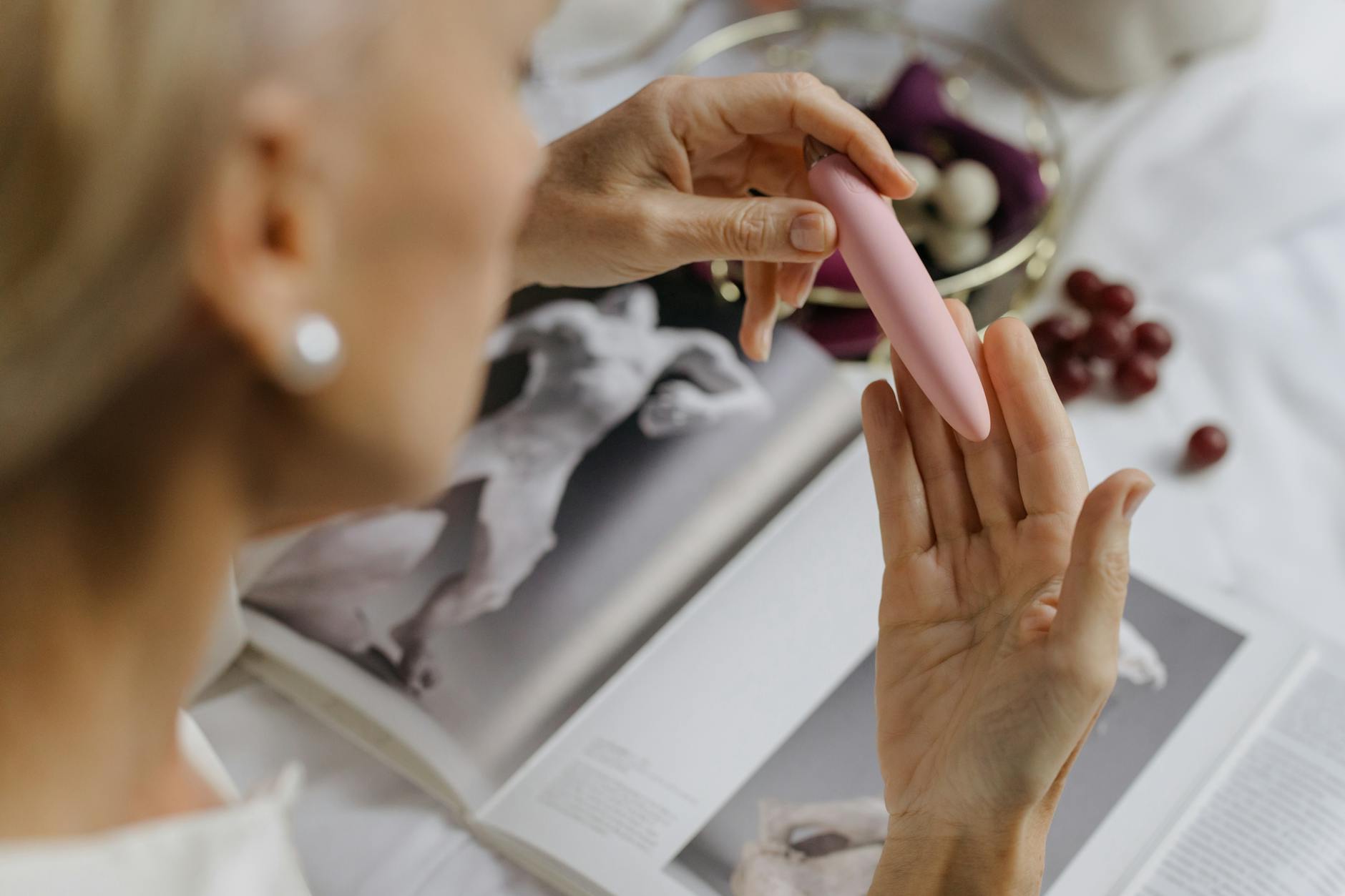
When your body wakes up after years of silence
You haven't thought about sex in a decade. Or you have, but it felt like thinking about skydiving while safely on the ground.a distant, theoretical thing. Then one day something shifts. A partner touches your neck. You see someone in a café. Your body responds. Your mind catches up. And suddenly you're sitting with this confusing, electric sensation: your libido is back.
This happens more often than you'd think, and almost nobody talks about it. The cultural conversation focuses on loss of desire, not the disorienting return of it. But the return carries its own challenges.a mix of hope, awkwardness, self-doubt, and the practical question of what to do now.
Let me walk you through what's actually happening, why it matters, and how using a lemon clitoral vibrator can be part of rebuilding that connection safely.
Why desire disappears and sometimes returns
Low libido doesn't happen in a vacuum. It's almost always downstream of something else. Depression. Stress. A medication that flattens your sexual response. Relationship strain. Trauma. Years of prioritizing everyone else's needs. Burnout so complete you can't imagine having energy for anything pleasurable.
The return of desire usually means one of those things has shifted. You came off the antidepressant, or switched to one that doesn't kill your sex drive. Your kids finally left home. The relationship either healed or you left it. You started therapy and processed something that was blocking you. Your body recovered from illness. You made space.
This second awakening isn't the same as the first time you ever felt desire. You're not 17. You know yourself differently. You've lived enough to have real reasons for the absence. That context matters because it means the return of desire often comes tangled with questions: Is this real or temporary? Should I trust this? Am I broken if it goes away again?
The discomfort of reconnecting after absence
Here's what I see in my practice: people experience genuine shame about this gap. A decade without sexual desire can feel like proof of something wrong with you. It's not. It's proof that something was pulling resources elsewhere.
But rebuilding after that absence requires a different approach than desire that's just been momentarily suppressed. Your body has to remember. Your mind has to trust that memory. And often, your nervous system has to learn that pleasure is safe again.
That's where a clitoral vibrator becomes genuinely useful. Not as a band-aid. As a tool for a specific job: retraining your body's capacity for sensation and response without the pressure of performance, without a partner, without the complexity of years of unmet needs.
Starting with exploration, not expectation
The first rule: you're not trying to have an orgasm. You're reacquainting yourself with sensation.
Set time aside when you have privacy and no agenda. I'm talking 30-45 minutes with nothing else scheduled. No partner waiting in the next room. No clock to watch. Just you and permission to feel whatever you feel, including nothing.
Start with a lemon vibrator on the lower settings. The Lem is designed with a broad suction base, which means it doesn't require the kind of precise positioning that can make returning to pleasure feel technical and frustrating. Start at pattern 1 or 2. Move it around the outer labia. Spend time here. Don't rush to direct clitoral stimulation.
Many people returning to desire after years of absence find that their clitoris feels hypersensitive at first, or numb, or both at different moments. That's normal. Your nervous system is waking up. It doesn't know yet whether this is safe. Gentle, indirect stimulation on the outer labia and inner thighs gives your body permission to respond without overwhelming.
Building tolerance and confidence
Over several sessions, you can gradually increase intensity. Move from pattern 1 to 2 to 3. But "gradually" might mean across weeks, not days. There's no timeline here. You're not trying to get anywhere. You're trying to rebuild trust in your own body.
One thing I consistently tell clients: if you feel numb or like you're "doing it wrong," you're not. Sensation returns unevenly. One day you'll feel everything. The next day your body feels far away. Both are okay.
Many people also find that their orgasm, when it returns, feels different than it did before. Softer. More located in one area than radiating outward. Shorter. Longer. Completely different. That's not a problem. Your body has changed. Your nervous system has changed. The pleasure you have now is the pleasure that fits the person you are.
Managing expectations with a partner
If you have a partner, you'll need to tell them something. You don't need to say everything, but hiding the fact that you're exploring solo isn't fair to either of you. A simple frame works: "I'm rediscovering my own pleasure. It's important to me, and I'm going to take some time for that."
Most partners understand that better than you'd expect. What they don't understand is secrecy, which reads as shame or rejection.
When you're ready to include a partner, a lemon vibrator is actually easier to integrate than you might think. There's no performance element. Your partner isn't doing anything to you. You're using the vibrator, they're present, and that's enough. You can hand it back and forth. You can use it solo while they touch you elsewhere. You can figure out what works by talking, not by reading minds.
What actually helps this transition stick
Three concrete things make this return feel stable instead of fragile.
First, consistency over intensity. A 15-minute session twice a week will do more for your nervous system than an occasional marathon. Your body needs to know pleasure is a regular part of life again, not a special-occasion surprise.
Second, zero performance pressure. I'm going to say this plainly: you don't need to orgasm. If you do, great. If you don't, you still got something from the time. You still reconnected with sensation. You still sent your nervous system the signal that pleasure is safe. That's the goal.
Third, separation from other relationship issues. If you're using a lemon vibrator to work on desire, that's one thing. But you can't vibrate your way out of a relationship problem. If the low desire was partly because your relationship is painful, reconnecting with pleasure solo won't fix the relationship. It will just clarify what you actually want from it. Which is sometimes the point.
When to bring a partner in
There's no timeline. But you'll know it when you're ready because your own solo exploration will start feeling pleasurable instead of like homework. When using a vibrator feels good instead of obligatory, that's the moment to think about sharing it.
The emotional part nobody mentions
Honestly though, the biggest barrier isn't physical. It's emotional. Coming back to desire after a decade of absence means facing some uncomfortable truths. Maybe you stayed in a relationship that wasn't serving you. Maybe you prioritized other people's needs so completely you lost yourself. Maybe depression or illness took years you can't get back.
There's often a quiet grief underneath the reactivation of desire. Give yourself permission to feel that alongside the joy of your body waking up. Both can be true at the same time.
When to talk to someone
If reconnecting with pleasure brings up trauma memories or panic, pause and talk to a therapist. This isn't failure. It's important information. Your body is telling you that pleasure isn't currently safe in your nervous system, and that deserves real support, not just a better vibrator.
If you've been on antidepressants or other medications and your desire is returning, it's also worth checking in with your prescriber. Sometimes low libido is the illness. Sometimes it's the medication. Understanding which one you're dealing with changes the whole picture.
The main thing to know
Your libido coming back isn't random. It's not a test or a sign of something you should immediately act on. It's your body telling you that something has shifted in your life. That could mean your relationship is solid and you're ready to deepen it. It could mean you're ready to take better care of yourself. It could mean you're finally in a place where pleasure feels possible again.
A lemon clitoral vibrator isn't going to solve any of that. But it can be a safe, pressure-free way to rebuild the conversation between your mind and your body. And that conversation is where everything else starts.
Frequently asked questions
What if I feel numb even after multiple sessions with a vibrator?
Numbness after years of low desire is incredibly common. Your nervous system hasn't sent those signals in a long time, and rewaking them takes patience. Try increasing session length before increasing intensity. Also, make sure you're not trying to chase sensation or judge yourself for not feeling "enough." The more you pressure yourself, the more numb you'll feel. If numbness persists beyond 8-10 sessions, check in with a therapist or your doctor. Sometimes numbness is connected to medication, hormone levels, or residual trauma that needs attention.
Is it normal for my orgasm to feel completely different than before?
Completely normal. Your body has aged, your nervous system has been through changes, and your brain is literally rewiring how pleasure works after a long absence. The orgasm you have now is the one that fits your current body. It might feel less intense, more localized, shorter, longer, or arrive from a completely different kind of touch. That's not worse. It's just different. Many people find that returning pleasure is actually richer than what came before because there's less performance and more presence.
Can I use a lemon clitoral vibrator with a partner who feels insecure about it?
Yes, but you need to talk about it first. Frame it as something for you, not something he's lacking. "I want to explore what helps my body feel good" is different from "You're not doing it right." Many partners also find that watching their partner use a vibrator is genuinely hot. But that's a conversation, not an assumption. If your partner is deeply resistant, that's worth exploring separately. Sometimes it's about insecurity. Sometimes it's about deeper relationship issues that no vibrator will fix.
How long does it usually take to rebuild a full sense of desire after years of absence?
There's no standard timeline. Some people feel reconnected after a few weeks. Others take months. The important thing isn't speed. It's consistency and removing pressure. If you approach this as "I have three months to fix my libido," you'll add stress to something that needs the opposite. If you approach it as "I'm going to spend the next few months getting to know myself again," the return of desire becomes a side effect of self-care instead of the goal.
Should I tell my partner I'm using a vibrator solo, or keep it private?
If you have a partner and they're invested in your intimacy together, they deserve to know. Not because you need permission, but because transparency builds trust. You don't have to share details. "I'm spending time exploring my own pleasure" is enough. What you're trying to avoid is a situation where your partner discovers the vibrator and feels betrayed because you kept it secret. Honesty upfront prevents that.
What if my desire spikes but my partner's doesn't match?
This happens. You come back to life, and your partner is in the place you were. That's a real mismatch, and it's worth addressing directly. Sometimes partnered desire reconnects once you start the conversation. Sometimes you realize you want different things. Neither outcome is wrong. It's clarifying. If your newly reconnected desire is important to you and your partner can't meet you there, that's a decision to make consciously, not something to resent silently.