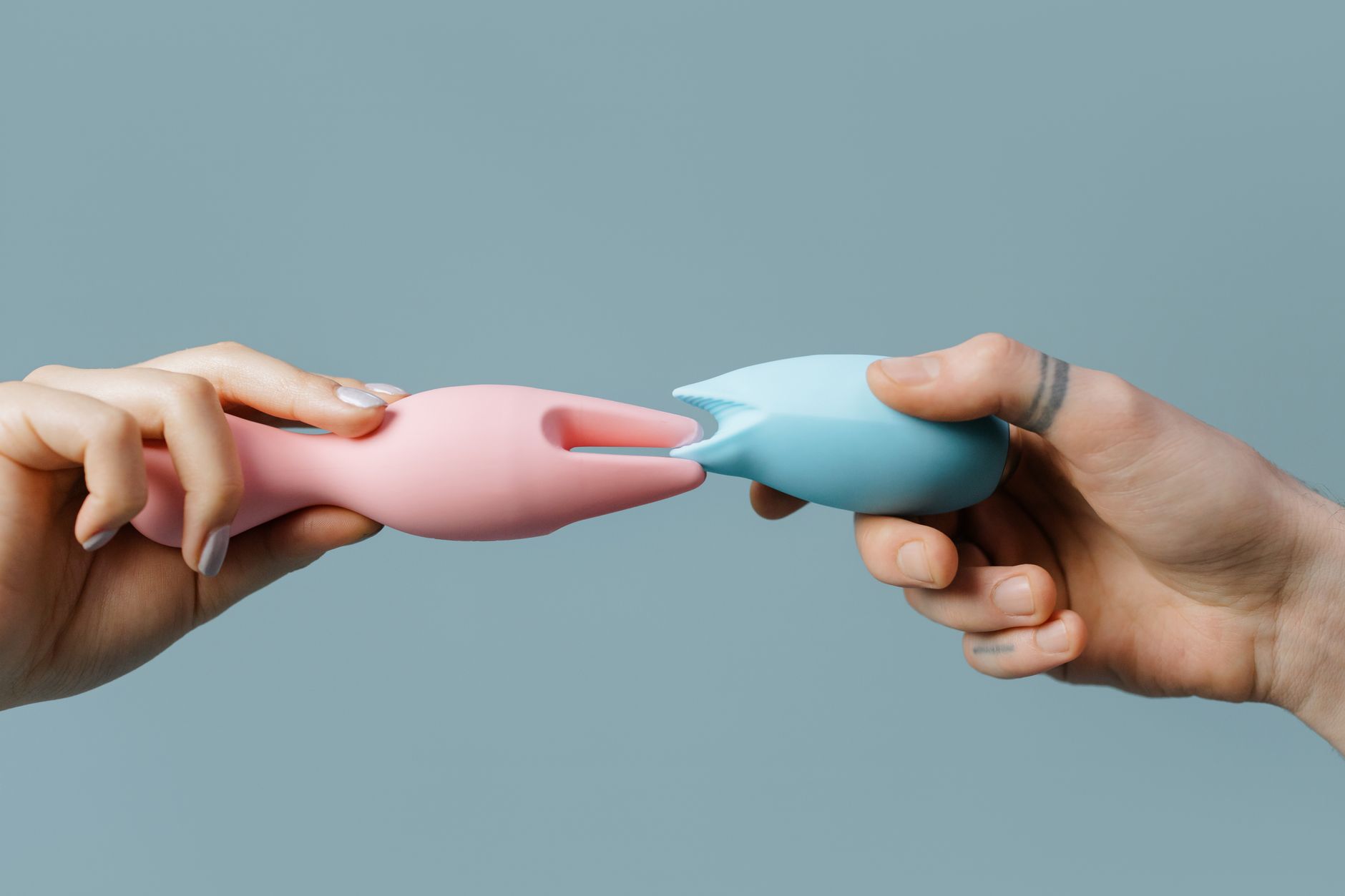
Let's name what actually happened to your desire
When you're living in prolonged stress, your body doesn't prioritize pleasure. Your nervous system is too busy running threat detection. Cortisol spikes, blood flow redirects to survival systems, and the parasympathetic nervous system (the one that powers arousal) goes offline. You're not broken. You're not less interested in your partner. Your body is doing exactly what it's supposed to do when it believes resources are scarce.
The problem is that stress doesn't always announce when it's leaving. You can still feel its aftermath weeks after the pressure lifts. That's where a lemon vibrator becomes genuinely useful, not as a Band-Aid but as a tool for literally rewiring your nervous system back into arousal mode.
Why stress sabotages arousal in the first place
Arousal is parasympathetic dominant. Your heart rate needs to slow slightly, blood pressure stabilizes, and your clitoris fills with blood. Stress is sympathetic dominant. Your heart races, muscles tighten, and blood floods your limbs instead of your genitals. The two states are biochemically opposed.
When you're under prolonged stress, your brain actually loses some sensitivity to sexual cues. You could be with someone you love, they could touch you in a way that used to work, and you'd feel almost nothing. This isn't emotional withdrawal necessarily. It's neurobiology.
The other thing stress does is attach anxiety to the idea of sex itself. You become hyperaware that you "should" be in the mood. You try to force it. That resistance then compounds the nervous system block. A lemon clitoral vibrator interrupts this loop because it offers sensation without performance pressure.
The nervous system reset protocol
You can't think your way out of sympathetic dominance. You have to feel your way out. Here's how to use a lemon vibrator strategically to shift your nervous system state.
Start solo, not partnered. This removes the performance element entirely. You're not trying to prove anything or meet an expectation. You're literally just rewiring your body's response to pleasure. Set aside 20 minutes when you're alone and relatively calm (not at peak stress, but not hours later either). This timing matters because your nervous system needs a runway to shift into parasympathetic mode.
Use low intensity first. Set your lemon vibrator to pattern 1 or 2. The goal isn't orgasm. It's sensation recognition. Move the vibrator slowly across your vulva, pausing at spots that feel interesting. Your nervous system is relearning that touch equals safety, not performance. This often takes 3-5 solo sessions before your body starts to recognize arousal again.
Add breathwork alongside vibration. Breathing directly controls your nervous system. As you use the vibrator, try 4-7-8 breathing: inhale for 4 counts, hold for 7, exhale for 8. This shifts you from sympathetic to parasympathetic. After a few minutes, switch to equal breathing (4-4 in and out). Most people find their clitoris becomes more sensitive within 2-3 minutes of deliberate breathing.
Notice sensation without chasing outcome. This is the hardest part because we're trained to use vibrators to get to orgasm as quickly as possible. After stress, that urgency actually blocks the nervous system reset. Your job is to feel the vibration, track your breathing, and notice what's happening. If you orgasm, great. If you don't, that's still a win because you've reconnected your body to pleasure sensation.
Moving from solo to partnered when stress has been the third person
Once you've spent a few sessions reconnecting solo, bringing a partner back into the equation becomes easier because you're not starting from zero arousal.
Tell your partner what you need before you begin. This isn't a conversation to have in the moment. Say something like: "I want to try reconnecting physically. I'm going to use the lemon vibrator while we're together. I'm not expecting anything specific to happen. I just want to be in the same space and feel my own body again." This sets zero pressure.
Start with you using the vibrator on yourself while your partner is present but not engaged in the direct activity. They might read or sit nearby. After a few sessions like this, you can progress to them touching you elsewhere (your back, your inner arm, your neck) while you use the lemon vibrator. This adds connection without performance demand.
The progression then moves to your partner holding the lemon vibrator while you guide it. This is where they're actively involved but you still have full control over pressure, speed, and sensation. Many couples find this is where desire actually starts to rebuild because you're getting partnership without obligation.
Why a lemon vibrator specifically works for post-stress reconnection
The suction sensation from lemon clitoral vibrators mimics the kind of stimulation that your nervous system recognizes as inherently safe. It's not aggressive or intense. It's rhythmic and predictable. After prolonged stress, your nervous system is hypervigilant. You need a tool that feels consistent and non-threatening. The lemon's design delivers exactly that.
Unlike wand vibrators that require more pressure or traditional vibrators with rapid pulsing, a lemon vibrator's gentle suction allows you to stay in the parasympathetic window longer. You're not fighting against intensity. You're inviting your body into gradual arousal.
The timeline for nervous system recovery
This matters because people often expect desire to snap back the moment stress ends. It doesn't. Your nervous system needs 2-4 weeks of consistent parasympathetic activation to begin downregulating cortisol and rebuilding arousal sensitivity. Some people need 6 weeks. There's no universal timeline.
Use your lemon vibrator 3-4 times per week during the reconnection phase. Each solo session is about 15-20 minutes. You're not racing toward orgasm. You're creating a ritual that tells your nervous system "this time is safe, this time is about feeling good."
After 3-4 weeks of consistent practice, most people notice that arousal begins to spontaneously return in other contexts. You'll think about your partner and feel it. You'll feel spontaneous desire in a way that stress had dampened. That's the nervous system reset working.
What happens when desire is still stuck after 6 weeks
Sometimes prolonged stress has triggered something deeper. Burnout, depression, or relationship fractures that stress exposed but didn't cause. If you're using a lemon vibrator consistently and desire isn't returning, that's worth exploring with a therapist. A relationship or sex therapist can help identify whether you're dealing with pure nervous system recovery or something that needs additional support.
It's also worth asking whether the stress itself is still active. If you're using the vibrator while still in crisis mode, your nervous system won't shift. Sometimes the first step is actually addressing the source of the stress, not just the symptom in the bedroom.
Reframing intimacy during recovery
Honestly, one of the best shifts I see couples make is redefining what intimacy means during stress recovery. It stops being "sex" and starts being "reconnection." You're using a lemon vibrator not to achieve an outcome but to rebuild the sensory bridge between you and your own body, and then between you and your partner.
That shift in framing actually accelerates the nervous system reset because you remove the performance pressure that stress already created. You're not trying to be sexy or available or spontaneous. You're trying to feel safe in your own skin again. That's the real work.
People also ask
How long does it take for libido to return after chronic stress?
Most people see noticeable shifts in 3-4 weeks of consistent reconnection work, but full nervous system recovery typically takes 6-12 weeks. That timeline depends on how long the stress lasted, whether it's resolved, and how much consistent parasympathetic activation you're practicing. Using a lemon vibrator 3-4 times weekly accelerates this because you're directly teaching your nervous system that pleasure is safe again.
Can I use my partner's help to speed up reconnection after stress?
Partner involvement can help, but only after you've spent 2-3 weeks reconnecting solo. If you jump straight to partnered activity, your nervous system is still in defense mode and partnership adds performance pressure. The solo phase is where the real reset happens. Think of it as a 2-3 week foundation that makes partnered reconnection actually work.
Does the intensity level of my lemon vibrator matter for stress recovery?
Yes. During stress recovery, start at the lowest intensity settings. Your nervous system is overstimulated already. High intensity feels like threat, not pleasure. Work your way up over 4-6 weeks. Many people find they actually prefer lower intensities permanently once they've reconnected this way.
What if I'm using a lemon vibrator but still feel nothing?
First, check whether the stress is actually over. If you're still in a high-stress situation, your nervous system won't shift no matter what tool you're using. Second, give it more time. Some people need 6-8 weeks before sensation starts returning. Third, add breathwork. The breathing component is what actually shifts the nervous system, not the vibrator alone. If sensation still hasn't returned after 8 weeks of consistent practice and breathing work, talking to a therapist is the next step.
Is it better to use a lemon vibrator alone or with a partner during stress recovery?
Alone first, then with a partner once arousal begins returning. Solo reconnection removes performance pressure and allows your nervous system to genuinely reset. After 2-3 weeks, add your partner as a present but non-demanding presence. Then gradually increase their involvement. This progression actually rebuilds desire faster than trying to do partnered activity while still stress-blocked.
Can I use the lemon vibrator while also on anxiety medication?
Absolutely. Some anxiety medications can blunt sensation, but using a lemon clitoral vibrator with consistent breathing work helps counteract that. Start at low intensity and give yourself more time to reach arousal. The combination of the vibrator and parasympathetic breathing work often helps people reconnect with sensation even while medicated.
The real work is nervous system repair, not just pleasure
After prolonged stress, a lemon vibrator isn't magic. It's a tool for nervous system recalibration. You're teaching your parasympathetic nervous system that it's safe to downregulate from survival mode. You're rebuilding the sensory pathways between your body and pleasure. You're reestablishing the bridge between you and your partner.
That work takes consistency, patience, and permission to move slowly. But it works. Most people who commit to 4-6 weeks of this kind of reconnection find that desire returns not as a forced performance but as a genuine physical urge. That's the nervous system reset you're after. That's what makes the difference.