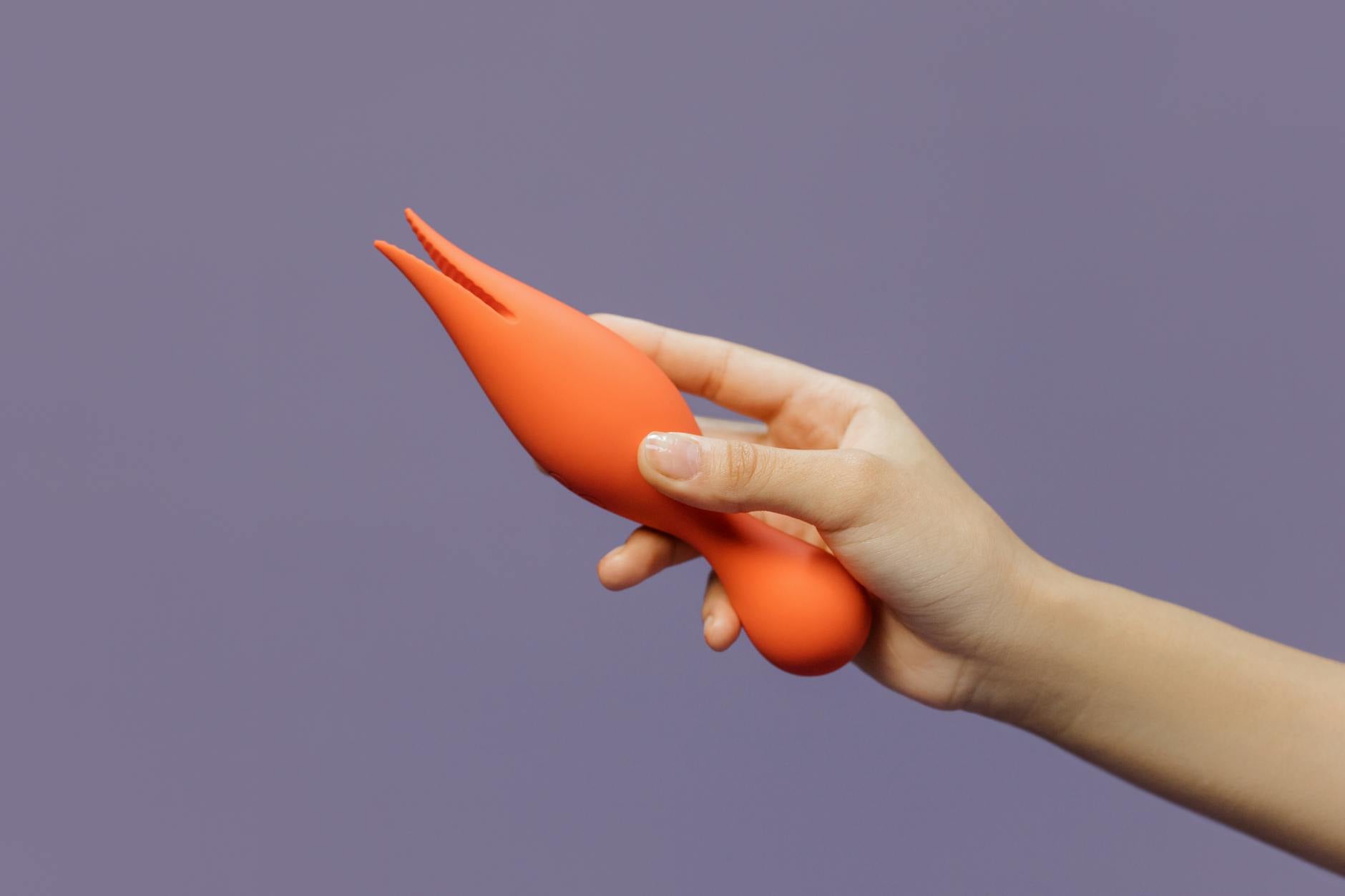
Sexual trauma rewires how your nervous system responds to touch. Your body learns to protect itself by tensing, numbing, or shutting down. That's not a character flaw. That's survival. The good news is that nervous system patterns can be retrained, and pleasure can be reclaimed. It takes time, it takes gentleness, and it absolutely requires tools that respect your pace.
A lemon clitoral vibrator isn't a magic fix. But it's specifically designed for what trauma recovery actually needs: predictable, non-invasive, controllable stimulation that you lead.
After trauma, penetration often feels threatening because it replicates the loss of control. The clitoris, by contrast, is external. You see it. You control exactly when and how it's touched. A lemon vibrator gives you consistent, gentle suction stimulation without the psychological weight of penetration.
The lem vibrator specifically uses air-pulse technology instead of traditional vibration. That matters because air suction mimics the sensation of oral sex, which many trauma survivors find less threatening than the mechanical buzzing of older vibrators. It's gentler. It's more rhythmic. It feels less clinical.
Most importantly, you control the intensity. The lem starts at the lowest pattern and builds from there. You're never ambushed by sensation.
Before you even use a lemon vibrator, the work is internal. Here's what I recommend to every client:
Create a contained space. Lock the door. Put your phone in another room. Tell your partner (if you have one) you need privacy. Your nervous system needs to know nothing surprising will happen.
Set a time limit. Trauma survivors often push through discomfort to "finish." That rewires the problem. Instead, set a timer for 10 or 15 minutes. When it goes off, you stop. No guilt. No judgment. This teaches your body that you're in control and that pleasure doesn't require suffering through discomfort.
Name your body as yours. This sounds obvious, but it's critical. Before you touch yourself, place a hand on your heart and say something like "This is my body. I decide what happens to it." This tiny ritual reminds your nervous system who's in charge.
Have an exit plan. Know in advance what you'll do if something triggers you. Maybe it's taking a bath. Maybe it's calling a friend. Maybe it's sitting outside. Practice it once before you ever pick up the vibrator.
First time: don't use the vibrator at all. Hold it. Feel its weight. Notice that it's smooth, that it has a shape, that it's made of medical-grade silicone. Let your nervous system get curious about it without pressure. This might take three or four sessions. That's fine.
Second phase: turn it on at pattern 1 (the gentlest setting) and use it over your clothes. Not on your bare skin yet. Just feel the sensation through fabric. Again, no goal of pleasure or arousal. Just sensation. Just noticing.
When you're ready: apply the lemon clitoral vibrator directly to the clitoris at pattern 1. Start for literally 30 seconds. Not minutes. Thirty seconds. Then stop. Your nervous system is learning that stimulation is brief, gentle, and within your control.
Gradually extend the time. Maybe the next session is 45 seconds. Then a minute. There's no rush. Some of my clients spent three months in this phase. That's not slow. That's smart.
When touch feels safer: you can experiment with moving to pattern 2 or 3. Most trauma survivors find they never need higher patterns. The gentleness is the point.
If you freeze mid-session, stop immediately. Don't try to push through. Your nervous system is saying "not yet." That's legitimate. Put the lemon vibrator down, and notice what happened. Did a particular sensation remind you of something? Did you suddenly feel unsafe? Was it a sound, a smell, a thought?
Write it down. Bring it to your therapist if you have one. This information is gold.
If you have a flashback (feeling like you're back in the trauma), turn off the vibrator, plant your feet on the ground, name five things you can see right now. This is called grounding. It tells your nervous system "you're safe, you're here, the trauma is not happening now."
If you're in a relationship, your partner needs to understand this isn't about them. Your trauma isn't their fault. Your recovery isn't their responsibility. But their patience absolutely matters.
Let them know you're working through something at your own pace. You don't need to disclose details unless you want to. You do need them to respect closed doors, not ask "did you finish," and never pressure you to move faster than you're ready for.
If your partner wants to be involved eventually, that's a separate conversation. Start with you alone and the lemon vibrator. Build your own relationship with sensation first. Partner participation comes later, only if you want it.
Recovering pleasure after trauma is grief mixed with hope. Some days you'll feel nothing. Some days a sensation will surprise you with how good it feels. Both are normal. The goal isn't constant pleasure. The goal is rebuilding the knowledge that your body can feel good without danger.
This takes time. I've worked with clients who took six months before they felt genuinely aroused. Others saw shifts in weeks. There's no timeline. Your timeline is the right one.
Trust matters more than intensity. Safety matters more than sensation. You're not trying to have the best orgasm of your life. You're trying to prove to your nervous system that you're in control. That you're safe. That pleasure is possible again.
If you're recovering from sexual trauma, therapy isn't optional. It's foundational. A somatic therapist or EMDR specialist can help your nervous system actually reprocess the trauma, not just manage around it.
If you're using a lemon vibrator and regularly having flashbacks, increase your therapy frequency. If you're using it and feeling genuinely aroused and safe, that's a sign your nervous system is healing. Celebrate that. Really.
If desire stays completely flat after several months of gentle work, mention it to your therapist. Sometimes medication helps. Sometimes it's a sign you need a different approach. That's not failure. That's information.
Completely normal. Your nervous system learned to protect you by numbing out. That's not permanent. Numbness often starts to shift when you've used a vibrator consistently (without pressure) for several weeks. If it doesn't shift after three months of regular, gentle use, talk to your therapist. Sometimes trauma recovery needs a different tool or approach.
Yes, but timing matters. Don't use it right after a nightmare or during a period of heightened flashbacks. Wait for a week when you feel more grounded. Active trauma processing (nightmares, intrusive thoughts) and pleasure work need to happen separately. Your brain can't do both at once.
Boundaries first, always. You can be in a relationship with someone and not be ready for sexual touch. Period. Tell your partner: "I'm working through something. Right now, I need solo time. I'll let you know when I'm ready to explore this together, or if I need help." A partner who respects that is worth keeping. One who pushes is not.
Healing feels like expansion. Pushing feels like resignation. When you're healing, sensations that once felt scary start feeling neutral, then maybe even good. You look forward to that private time. When you're pushing, you dread it, do it anyway, and feel relieved when it's over. If that's your pattern, pause. Something needs to shift.
Absolutely. Since the lemon clitoral vibrator works externally on the clitoris, it doesn't require vaginal penetration or pelvic floor relaxation. That said, pelvic floor tension often holds trauma. Gentle internal massage or pelvic floor physical therapy might help alongside external clitoral work. Ask your pelvic floor PT if they recommend combining approaches.
Yes, if you feel safe doing so. A good trauma-informed therapist won't be shocked. They might ask what you're noticing, whether it's helpful, whether anything triggers you. This information helps them guide your recovery. If your therapist shames you for using a vibrator, that's a sign you might need a different therapist.
Your body remembers trauma. It also remembers safety, tenderness, and pleasure. A lemon clitoral vibrator won't erase what happened. But used at your pace, in a framework of genuine safety, it can help you practice reclaiming sensation and control. That practice is how healing happens. Not all at once. Not perfectly. But real.
If you're in the thick of recovery right now, you're already doing the hardest work. Using tools like a lem vibrator is just one small part of that. The bigger part is the courage it takes to believe pleasure is possible again. You're doing that already.