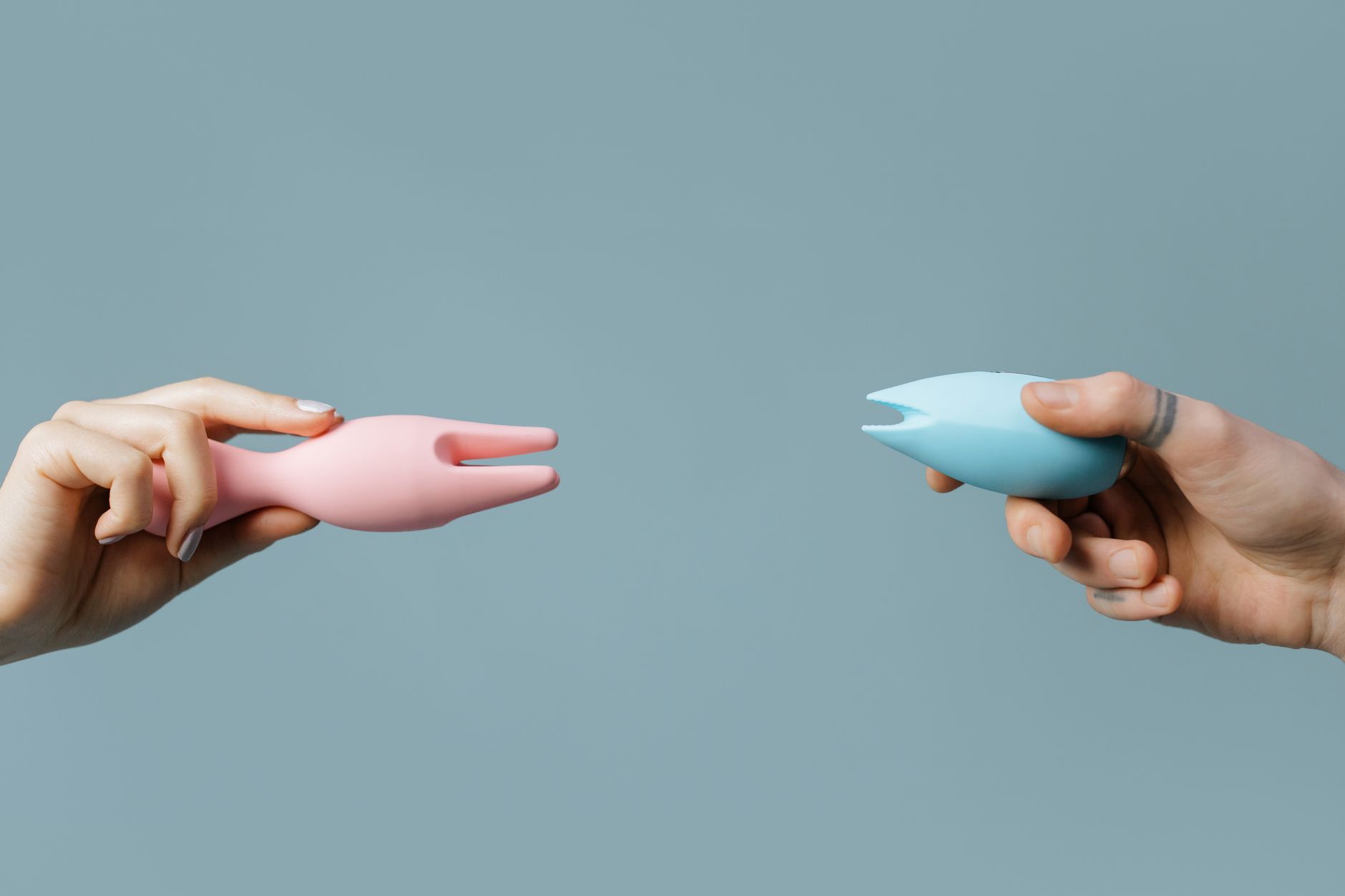
Let's talk about the arousal speed mismatch
Here's what happens in a lot of partnerships. One person is suddenly ready for sex. The other person is still thinking about the grocery list. Not because they're not interested. Not because the partnership isn't solid. Just because arousal doesn't operate on a synchronized schedule.
This gap used to mean one of three bad outcomes: fake enthusiasm, a rushed warm-up that leaves you sore, or one partner just waiting while the other catches up (which kills the mood for everyone). A lemon vibrator changes that equation entirely.
Why the arousal speed gap actually matters
There's a real biological difference here. Someone might reach peak arousal in three to five minutes. Someone else might need twelve to twenty. Add in stress, hormones, medication, or just being tired, and that timeline stretches further. That's not a flaw in your relationship. That's baseline neurology.
The problem isn't the gap itself. It's what usually happens next: one partner waits (resentfully). The other partner feels pressured (which makes arousal even harder). Or someone starts having sex before their body is actually ready, which leads to tightness, reduced lubrication, and sex that feels mechanical instead of connected.
A lemon clitoral vibrator sitting between you during the in-between moment solves all three problems at once.
How the lemon works as a bridge tool
The lem vibrator is specifically designed to work on clitoral tissue without requiring the kind of full-body arousal that takes longer to build. You can be mentally engaged with your partner, kissing, talking, being touched, while the lemon is doing the neurological heavy lifting of getting your nervous system online.
This is not the same as your partner watching you use a toy alone, which can feel isolating. And it's not the same as forcing yourself into sex before you're ready. It's an active, connected third thing that keeps intimacy flowing while your body catches up to your mind.
The suction pattern on the lemon is particularly useful here because it doesn't require much voluntary input from you. With some vibrators, you have to do the work of positioning, adjusting, staying focused. The lemon's suction does the work for you, which means you can actually stay mentally and emotionally present with your partner instead of concentrating on technique.
The practical setup that actually works
Start before sex is on the agenda. This matters. If you know your partner typically initiates in the evening, spend some time during the day thinking about what actually turns you on. Not performing what you think you should want. Actually thinking about a fantasy, a memory, a scenario that works for you. That mental priming cuts arousal time in half.
When your partner initiates, be honest immediately. "I'm not there yet, but I want to be. Can we start slow?" This isn't rejection. It's information. It's actually deeper than "I'm ready when you are," because you're telling them the truth about where you are.
Have the lemon accessible. On the nightstand. In a drawer. Somewhere you don't have to hunt for it in the moment, which breaks the mood and makes you feel like you're solving a logistics problem instead of building intimacy.
Start with patterns one through three. The lemon has multiple patterns, and jumping straight to the intense ones when you're not yet aroused can feel too strong or even uncomfortable. Low intensity, high intensity later. You'll know the difference once you're actually engaged.
What your partner should (and shouldn't) do
Here's where relationship communication matters more than the vibrator. Your partner should understand that the lemon is not a replacement for their touch. It's a tool that lets you receive their touch while something is also happening with clitoral stimulation.
While you're using the lemon, your partner can be kissing you, touching your body, talking to you, building the connection. They're not sitting back watching you have an experience separate from them. They're part of the moment. The toy is just handling one piece of the puzzle while they handle the rest.
One thing partners often do wrong: they start assuming that if you're using a vibrator, they should back off other touch. Actually the opposite. This is when you want more hand contact, more kissing, more words. The vibrator isn't there to replace them. It's there to create the bandwidth for them to matter more.
The arousal signals that mean you're actually ready
Don't wait until you think you should be ready. Wait until your body is actually ready. Signs that it's time to transition: your breathing has deepened, you're contracting around your fingers involuntarily, your skin is flushed, you've forgotten about that grocery list.
You might use the lemon for five minutes. You might use it for fifteen. There's no timeline here. The point is that by the time you put it down, both of you are actually aroused and genuinely connected, not one person waiting and one person faking.
If you're still not there after twenty minutes, that's information too. Maybe you're more tired than you thought. Maybe something's going on emotionally that needs talking about instead of sex. Maybe you need a different kind of foreplay. The lemon doesn't solve for every arousal issue. It just solves for the speed mismatch.
Why this matters for the long term
Partners often interpret arousal gaps as rejection. "If they wanted me, they'd be ready faster." That's not how bodies work, but it's how a lot of people feel. Using a tool like the lemon openly in front of your partner actually rewires that interpretation. It becomes "I want you, and here's what my body needs to fully show up for you," instead of an invisible waiting period that breeds resentment.
Over time, your partner might notice patterns too. Maybe you're more responsive at a certain time of day. Maybe you need more foreplay some days and less others. Maybe a particular kind of touch gets you there faster. When the gap isn't a problem to solve with speed, you both actually pay attention to how you work. That's relationship gold.
Lemon vibrators work because they're honest tools. They don't make you fake arousal. They don't ask you to rush. They just give both partners a way to stay connected while your nervous systems sync up on their own timeline.
FAQ: Arousal gaps and lemon vibrators
Is it normal for partners to have different arousal timelines?
Completely. Arousal speed varies based on baseline neurology, hormones, medication, stress levels, and how much mental space you have. Two people in a healthy relationship often have different timelines. What matters is what you do about it.
Will using a lemon vibrator make my partner feel less needed?
Not if you're using it together. The difference between solo use and partnered use is huge. When your partner is there, touching you, talking to you, watching you experience pleasure, the vibrator becomes part of the intimacy, not a replacement for it. Many partners find it actually increases their sense of participation.
How long should foreplay take if one of us needs more time?
As long as it takes. Rushing foreplay because someone's impatient is how you end up with uncomfortable sex, reduced lubrication, and resentment. If one person regularly needs fifteen to twenty minutes of warm-up, that's not a flaw. That's the actual timeline your body needs. Build it in.
Can a lemon vibrator help if I take antidepressants that delay arousal?
Yes. Many antidepressants slow arousal and orgasm. A clitoral vibrator like the lem can help by providing direct, consistent stimulation that doesn't require as much voluntary effort from you. You're still aroused. Your body just needs a different type of input to get there.
What if my partner thinks using a vibrator means I'm not attracted to them?
That's a conversation you need to have separately from the bedroom. The lemon isn't there because your partner isn't attractive or desirable. It's there because your specific neurology takes longer to engage. Many people with high sex drive use vibrators with partners they're intensely attracted to. The two aren't mutually exclusive.
Should I hide using the lemon from my partner?
No. Hiding it creates shame and actually reinforces the idea that your arousal timeline is something to be embarrassed about. Using it openly and talking about it says: this is part of how my body works, and I trust you enough to let you see it.
The real work is the conversation
The lemon vibrator is just a tool. The actual shift happens when you stop treating the arousal gap as a problem and start treating it as information. Information about how your body works. Information about what your partner can do differently. Information about the specific kind of foreplay that actually gets you there instead of the kind you think you should want.
If you're looking to explore how a clitoral vibrator like the lem can fit into your specific situation, learn more about choosing the right vibrator for your body. If the arousal gap is part of a larger pattern around desire or initiation, this guide on rebuilding intimacy might help too. Either way, the conversation with your partner matters more than the tool. The tool just makes the conversation easier to have.