Let's talk about the nervous system first
When you've experienced trauma, your nervous system learns to protect you by treating touch as a threat. That's not weakness. That's your body doing exactly what it's designed to do. But reclaiming intimacy means slowly teaching your nervous system that certain touch is safe again. A lemon clitoral vibrator can be part of that conversation, but only if you use it right.
Here's what I see in my practice: people who've been through trauma often skip directly to goal-oriented sex without rebuilding the foundational piece first. Touch tolerance isn't something you rebuild in one session. It's a series of small permissions.
Why lemon vibrators work differently for sensitive nervous systems
The suction-based design of a lemon clitoral vibrator changes the game for trauma survivors in three specific ways.
First, it's not a pressure-based sensation. Traditional vibrators require direct mechanical pressure on delicate tissue. A lemon vibrator creates gentle suction instead, which stimulates the nerve endings without feeling invasive. For people whose nervous system has learned to perceive touch as dangerous, that distinction matters.
Second, you control the intensity in granular steps. The lemon vibrator has five distinct settings, which means you're not jumping from off to overwhelming. You're building incrementally. Setting 1 feels almost meditative. Setting 2 adds a bit more. By the time you reach setting 5, you've already spent time acclimating your nervous system.
Third, the physical distance between your hand and the sensation creates psychological safety. You're holding the device, not being touched by another person. Your nervous system registers that you're in control, which is often the first permission trauma survivors need to give themselves.
Start with awareness, not sensation
Before you even turn anything on, spend a few sessions just holding the device. Sit with it. Notice what comes up. Nervousness? Curiosity? Grief? All of those are data, not problems to solve. Your nervous system is learning that this object is safe to be near.
When you're ready to use it for the first time, set a timer for two minutes and commit to just that. Two minutes with setting 1 in a space where you feel completely secure. You're not trying to orgasm. You're not trying to feel pleasure. You're introducing your nervous system to a new sensation at low stakes.
Many of my clients find that the first few times feel clinical or numb. That's normal. Your nervous system is still deciding if it's safe to feel. By the third or fourth time, you'll notice a shift. The sensation will start to register differently.
Create a container that protects your nervous system
There's nothing healing about white-knuckling through discomfort in hopes that pleasure will show up. Safety is the prerequisite.
This means: a locked door, your phone on do-not-disturb, no time pressure, and ideally a way to ground yourself if you get flooded. Some of my clients keep ice water nearby or a weighted blanket. Some prefer grounding techniques like pressing their feet into the floor. Your nervous system needs to know it can exit at any moment.
If you have a partner, they do not need to be present for this work. In fact, for many trauma survivors, the first few months of rebuilding touch tolerance happen alone. That's not a limitation of your relationship. That's wisdom. Once your nervous system has recalibrated with a lemon vibrator in solo sessions, partnered exploration becomes possible from a place of consent, not desperation.
The four-week rhythm that actually works
Weeks 1-2: Setting 1 only, two minutes, two to three times per week. You're building tolerance, not chasing sensation.
Weeks 3-4: Add setting 2 when you feel ready, still two to three times per week. If setting 1 has started to feel neutral or boring, that's a sign your nervous system is acclimating.
Weeks 5-8: Gradually extend time if you want to. Switch between settings 1 and 2. Notice what your body is telling you.
After eight weeks: Many people find they're ready to explore a partner experience, or simply to use the lemon vibrator with more freedom and less self-monitoring. By then, your nervous system has had time to rewire the story about what touch means.
This is not a fast process. That's not failure. That's wisdom.
What to do if you get flooded
You'll know if you're flooded because your nervous system will tell you. Your breathing gets shallow. You might feel numb. You might feel panicked. Your chest might tighten. The moment you notice any of these, stop.
Turn off the device. Take three deep breaths where you exhale longer than you inhale (this shifts your nervous system out of fight-or-flight). Ground yourself using the 5-4-3-2-1 technique: name five things you see, four you can touch, three you hear, two you smell, one you taste.
Then pause your practice for a few days. This isn't setback. It's information. Your nervous system is telling you that you need more time at the current stage. Honor that.

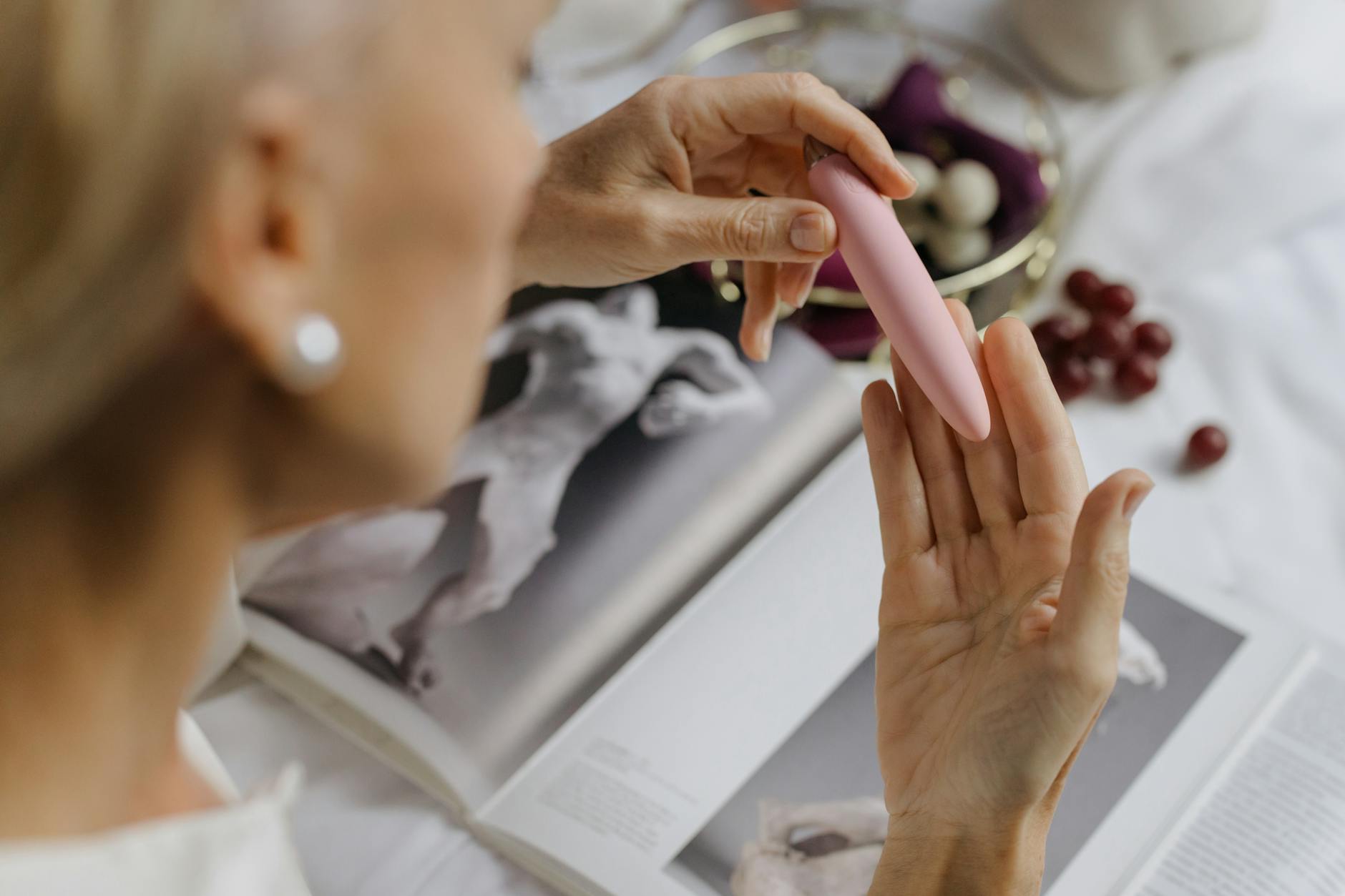
Photo by cottonbro studio on Pexels
When to involve a partner
After you've spent several weeks rebuilding your own relationship with touch using a lemon clitoral vibrator, partnered exploration becomes possible. But it needs structure.
Start by telling your partner exactly what you're doing and why. "I'm rebuilding touch tolerance. I'm using the lemon vibrator to teach my nervous system that certain sensations are safe. I'm not ready for partner touch yet, and that's not about you." Most partners appreciate clarity and timeline. It reduces their anxiety and increases the possibility of genuine support.
When you do involve your partner, start with the device still in your control. They can watch. They can be present. But your hand holds the remote. That maintains the sense of agency your nervous system needs right now.
After a few weeks of that, you might be ready for your partner to hold it while you give real-time feedback. "Slower." "Lower intensity." "I need to stop." This builds trust and shows your partner exactly what you need.
The conversation with yourself you're actually having
Using a lemon vibrator after trauma isn't really about sensation. It's about rewiring the conversation between your mind and your nervous system. You're saying: "I'm choosing this. I'm in control. This is my body, and I get to decide what happens to it."
That conversation is revolutionary for many trauma survivors. And it doesn't always feel good at first. Sometimes it feels awkward or disconnected. That's healing, not failure.
Your pleasure matters. And it can wait until your nervous system believes it's truly safe.
People also ask
Can I use a lemon vibrator if I have PTSD triggered by specific touch?
Absolutely, but with intention. The key is that a lemon vibrator is stationary suction, not pressure or penetration, which means it avoids the specific touch patterns that might trigger flashbacks for many trauma survivors. Start with the lowest setting and shortest duration. If any setting or pattern triggers a response, stop immediately and try again another day. There's no timeline here.
How do I know if I'm healing or just pushing through discomfort?
Healing feels like gradual expansion. You can tolerate a bit more each week, and it feels possible rather than forced. Pushing through feels like white-knuckling, dissociation, or panic. If you notice yourself holding your breath, tensing your muscles, or emotionally checking out, you've crossed into pushing. That's a signal to slow down and give your nervous system more time at the current stage.
What if using a lemon vibrator brings up grief or sadness?
That's one of the most common responses in my practice, and it's not a sign something is wrong. Trauma often numbs us, and reclaiming sensation can mean reclaiming the full range of emotions too. Grief and sadness might come up as your nervous system realizes it's been disconnected for a long time. Sit with it. It's part of healing. If the emotion feels overwhelming, pause the practice and consider working with a trauma-informed therapist.
Should I tell my partner I'm rebuilding touch tolerance this way?
Yes, unless you're in an unsafe relationship. Honesty creates room for actual support. A partner who loves you will appreciate understanding why you need this time and what you're working toward. If your partner responds with pressure, judgment, or dismissal, that's important information about the relationship dynamic itself.
Can medication affect how a lemon vibrator feels when rebuilding sensitivity?
Definitely. Antidepressants, anti-anxiety medications, and trauma medications can all affect sensation and arousal. This is not a reason to stop the medication. It's a reason to give yourself even more time. Your nervous system is working harder to regulate. Meet it where it is, not where you wish it to be. If your medication is significantly dampening sensation, a conversation with your prescriber can help you explore options.
What if I use a lemon vibrator and nothing happens for months?
Nothing happening is still data. It might mean your nervous system needs more time. It might mean you need a different approach entirely. Some trauma survivors find that partnered exploration happens before solo exploration. Some need consistent therapy work before sensation returns. There's no universal timeline. If you're stuck, bringing this to a trauma-informed therapist or sex therapist can help you identify what your specific nervous system needs next.
The long view
Reclaiming pleasure after trauma is not about forcing sensation to return on a deadline. It's about rebuilding the conversation between your mind and your body. A lemon clitoral vibrator can be a gentle tool in that conversation, one that lets you practice agency, incremental tolerance, and permission on your own terms.
Your healing timeline is yours alone. There's no rush, and no amount of "should" changes that. When you're ready, reaching out for professional support can help you navigate the specific contours of your own nervous system.
You deserve to feel pleasure again. And you deserve to get there in a way that feels genuinely safe.