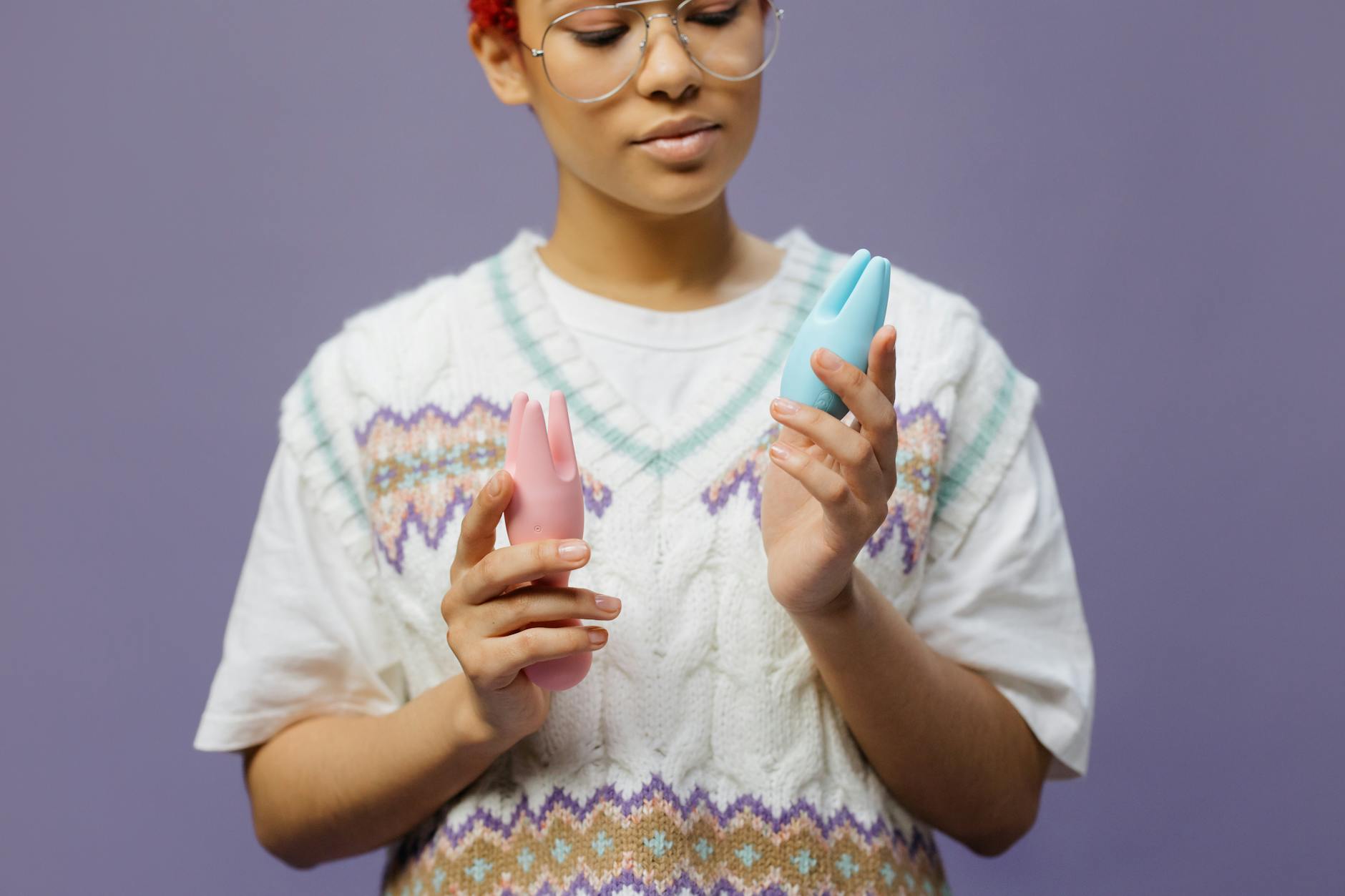
How hormonal shifts rewire your pleasure
Here's the thing: hormonal changes don't break your ability to feel good. They rewire it. Whether you've started or stopped birth control, entered perimenopause, begun hormone therapy, or navigated any other hormonal transition, your body is responding to real chemical changes. Your clitoris hasn't lost sensation. Your arousal hasn't vanished. But the pathway to both has shifted, and that matters.
I work with people navigating this all the time. The pattern is always the same: the techniques that worked last year don't work the same way now. The timeline for arousal stretches. Sensation intensity changes. Many interpret this as loss. It's not. It's recalibration.
The good news is that a clitoral vibrator like the Lem is built for exactly this kind of transition. Unlike friction-based stimulation, air-suction technology works with your body's current sensitivity profile, not against it. This post walks you through how to use a lemon vibrator strategically during hormonal change, what to expect, and how to rebuild pleasure on new terrain.
What hormonal shifts actually do to arousal
Hormones don't control pleasure directly. They're the scaffolding underneath arousal, sensation, and responsiveness. When they shift, the scaffolding moves.
Estrogen levels affect blood flow to the clitoris. Drop estrogen, and it takes longer for blood to engorge the tissue, which means arousal builds slower. Progesterone influences the nervous system's resting state. Higher progesterone can make you feel more subdued; lower levels sometimes sharpen sensation. Testosterone, which people with vulvas absolutely produce, fuels desire. Less of it can mean less spontaneous arousal, though not necessarily less capacity for pleasure once things get going.
The clitoral tissue itself stays intact. The nerve endings don't disappear. But the responsiveness of the surrounding tissue changes. That's why a device that used to feel perfect might suddenly feel too intense, or conversely, why you need more stimulation to reach the same endpoint.
This is temporary or manageable in every case. Your body isn't broken. It's asking you to adjust your approach.
Why clitoral vibrators work better during hormonal transitions
Think of the difference between a traditional vibrator and a suction-based lemon vibrator this way: a regular vibrator relies on speed and friction. A clitoral vibrator like the Lem uses gentle pulsing suction, which creates a very different sensation profile.
When your arousal timeline stretches (because hormones have slowed blood flow), friction-based stimulation can feel abrasive or desensitizing before you've had time to fully arouse. Suction, by contrast, draws blood into the tissue steadily and gently. It works with your body's slower warm-up time instead of against it.
When sensation becomes uneven or muted, the Lem's focused suction pattern on the clitoris creates a clear sensation. There's less guesswork. You're not chasing stimulation across a wider area; you're getting consistent, localized feedback.
Another reason: if you're navigating hormonal birth control, perimenopause, or post-menopause, your tissue may be thinner or drier. The Lem doesn't require the kind of direct friction that can feel scratchy on delicate tissue. It creates sensation through suction and pulsation, which translates to comfort plus intensity.
The warm-up protocol that works when arousal is slow
Let's be direct: if hormonal changes have stretched your arousal timeline, forcing it doesn't help. You need a setup that invites arousal to build on its schedule.
Start with a full 15-20 minutes of foreplay or self-touch before you ever pick up the lemon vibrator. I know that sounds long. It is. It's also the whole point. Your body is asking for longer warm-up. Give it that.
Use your hands on other parts of your body first. Touch your breasts, your neck, your thighs. Let arousal build gradually. This isn't wasted time. This is the actual beginning of the experience, not foreplay before foreplay.
When you do reach for the Lem, start on the lowest setting (pattern 1 or 2). Place it directly on the clitoris and hold it still for 30 seconds before you move it. Let the sensation build. Many people want to immediately increase intensity. Resist that. Stay with the lower intensity for 5-10 minutes.
If you're using a partner, ask them to handle other stimulation while you use the vibrator. Internal stimulation, kissing, touching elsewhere. This keeps arousal spreading instead of narrowing to just the external stimulus.
You're not rushing. You're syncing with your body's actual pace.
Adjusting intensity when sensation feels unpredictable
Hormonal shifts can make sensation uneven. Some days the Lem feels perfect on level 3. Two days later, level 2 feels too strong. This is normal and temporary as your hormones stabilize, but it's also disorienting.
Here's the strategy: treat each session as its own experiment. Check in with yourself before you start. On a scale of 1-10, where's your baseline sensitivity today? If it feels higher, start lower than last time. If it feels muted, you might jump to pattern 3 instead of 2.
Many people find that the pulsing patterns on the Lem work better than steady vibration during hormonal transition. Patterns 4-7 offer rhythm without constant intensity. This gives your nervous system something to follow, which can help organize sensation when it feels scattered.
If you find yourself desensitizing quickly (needing increasingly higher intensity to feel anything), take a break. Stop for 30 seconds. Go back to hand stimulation. Let sensation reset. Then restart the vibrator at a lower level. You're teaching your tissue to stay responsive, not to chase stimulus into numbness.
The lubrication conversation hormones require
Lowerered estrogen means less natural lubrication. This is true during perimenopause, after birth control changes, and in the postpartum window. It's also completely manageable.
Use water-based lubricant, even if you feel like you don't need it yet. The Lem against dry tissue creates unnecessary friction, which defeats the whole purpose of using a suction device. With lube, you get the full experience.
Reapply halfway through. Lube dries. This isn't a sign something's wrong. Just add more.
If you're using hormonal birth control and experiencing dryness, talk to your provider about formulation changes. Some birth controls affect lubrication more than others. A simple switch might solve this entirely.
When to introduce the vibrator back into partnered sex
If you're rebuilding pleasure with a partner after hormonal shifts, the Lem can be a shared tool, not a replacement.
Use it together first, alone. Show your partner how it feels, what patterns you prefer, where you want it. This removes the performance pressure that often creeps in when you're introducing a device into partnered sex.
When you do use it together, talk about it openly. "I'm noticing my body's arousal timeline is different right now. The vibrator helps me get there without pressure." This frames it as adaptation, not inadequacy.
Consider using the Lem during penetration or other forms of sex rather than as a standalone activity. Many people find that clitoral vibration plus internal stimulation creates the sensation profile their body needs during hormonal transition.
Your partner doesn't need to do anything different on their end. The Lem is just an addition, not a replacement for their touch or presence.
When hormonal shifts need more than a vibrator
If arousal hasn't returned after 3 months of your hormonal shift stabilizing, if sensation is completely absent, or if pain appears during sex, see a provider. Some hormonal transitions require topical treatment, systemic adjustments, or pelvic floor work that a vibrator can't address alone.
The Lem is a tool for adaptation and exploration, not a treatment for medical conditions. It works beautifully alongside other approaches, but it's not a substitute for professional guidance when something feels genuinely wrong.
Rebuilding takes time and patience
Here's what I want you to know: hormonal changes are temporary or manageable, and your capacity for pleasure is never actually gone. It's just rerouting. The Lem, used thoughtfully during this transition, helps you find the new route faster. You're not starting from zero. You're just recalibrating. Give yourself that grace.
People also ask
How long does it take to rebuild pleasure after hormonal changes?
It varies, but most people report noticeable shifts within 4-8 weeks once they've adjusted their technique and given their body time to adapt. Hormones themselves can take 2-3 months to fully stabilize after a major change like birth control adjustment or entering perimenopause. Be patient with the timeline. Pleasure doesn't return on a deadline.
Can I use a regular vibrator instead of a clitoral vibrator like the Lem?
You can, but clitoral vibrators are often easier during hormonal transition because they work with slower arousal and changing sensitivity. A traditional vibrator relies on speed and friction. The Lem's suction-based approach is gentler on tissue and works better with extended warm-up. That said, if you already have a vibrator you like, try adjusting your technique first. Lower intensity, longer warm-up, more lube. The Lem is an upgrade, not a requirement.
What if the Lem feels too intense even on the lowest setting?
Start with the lowest pattern (pattern 1) and hold it further from the clitoris, against the outer lips or hood instead of directly on the glans. This diffuses the sensation. You can also try using it over underwear or through a thin cloth. Gradually move closer as you acclimate. Your sensitivity will increase as your hormones stabilize.
Do I need to use lube with a clitoral vibrator?
Yes, especially during hormonal transition when natural lubrication is lower. Water-based lube reduces friction and lets the device work as intended. It's not a sign of dysfunction. It's smart adaptation. Reapply halfway through if needed.
Can I use a clitoral vibrator if I'm on hormone therapy?
Absolutely. In fact, during the adjustment period of hormone therapy, a clitoral vibrator can help you stay connected to pleasure as your body acclimates. Your arousal timeline might still shift as hormones stabilize. Use the same warm-up and intensity-adjustment strategies outlined above. If you're concerned about interactions, ask your provider, but vibrators don't interfere with hormone therapy.
How do I know if my pleasure issues are hormonal or something else?
Hormonal pleasure changes typically coincide with a known hormonal shift (birth control change, perimenopause, postpartum, starting or stopping hormone therapy). They develop gradually, not suddenly. Non-hormonal pleasure issues often arise from emotional factors, relationship dynamics, anxiety, or medical conditions unrelated to hormones. If you can't pin your changes to a hormonal event, talk to a provider or a sex therapist. It's probably not what you think it is.
The bottom line
Hormonal shifts are real. They reshape arousal, sensation, and response time. But they don't erase your capacity for pleasure. Using a clitoral vibrator like the Lem thoughtfully during this transition means adjusting your warm-up, respecting your body's new pace, and trusting that pleasure isn't lost. It's just temporarily rerouting. Your body will recalibrate, and with the right tools and patience, you'll find your way back to full sensation and response. If you're navigating relationship dynamics around these shifts, our guide on rebuilding intimacy after hormonal changes offers partner-inclusive strategies that work alongside solo exploration.
Your pleasure matters. Hormones don't get to rewrite that.